
Don’t forget your met masts: lessons in maintenance, safety and longevity
26 Nov 2025
Met masts may be out of sight, but they’re critical to every wind project. Learn why regular maintenance protects your data, ensures safety, and extends asset lifespan before small issues turn into costly downtime.
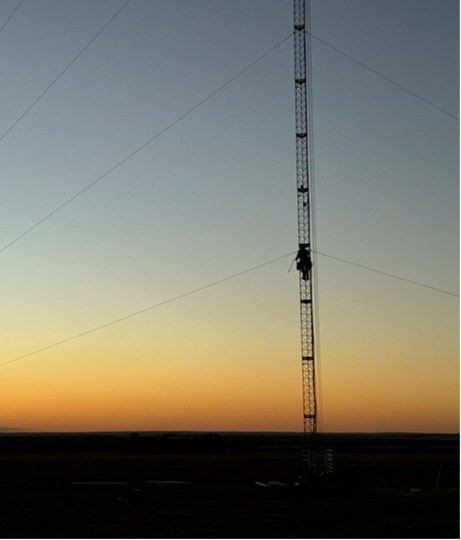
In the race to deliver reliable wind renewable energy, there’s one unsung hero quietly standing tall in the background: the met mast. Without it, the data driving multi-million-dollar decisions simply doesn’t exist. But like any critical asset, neglecting regular maintenance can lead to costly downtime, data loss and safety risks.
At ART, we recommend that met masts are maintained at least every two years. It is a simple but effective way to protect your investment, ensure data accuracy, and meet compliance standards.
The case for care
Regular maintenance is not just a tick-box exercise; it’s an investment in safety, compliance, and project longevity. We recommend inspecting and maintaining met masts at least every two years, and here’s why it matters.
Vertical alignment
Over time, environmental factors such as wind loading or soil movement can cause your mast to lean and lead to inaccurate measurements. Routine checks help ensure your mast remains stable, upright, and trustworthy.
Keep tension where it counts
Guy wires do the heavy lifting. Uneven tension or corrosion in these cables can compromise the entire structure. Checking and re-tensioning them keeps your mast secure through changing weather and conditions.
Tighten what time loosens
Over time, bolts naturally loosen through vibration and movement. A few minutes spent checking and tightening them can prevent costly failures down the track.
Stay ahead of corrosion
Australia’s harsh climate is tough on metal. Rust, salt, and moisture can eat away at your mast’s strength. Regular inspections and preventative treatments keep corrosion from becoming a safety risk.
Nature happens
Plants grow and bird's nest; Keeping your site clear of flora and fauna damage helps ensure sensors and cables can do their job uninterrupted.
Test your tech
Your sensors are the heartbeat of your data collection. Calibrating and testing your wind system ensures that the information you rely on is accurate and complete.
What happens when you wait too long
At a recent maintenance job in Queensland, our team was sent out to undertake a quick sensor swap. The mast had not been touched for over four years, and a maintenance job that should have taken a day turned into a full site shutdown.
Our team found severe corrosion in the guy wires, making the structure unsafe to climb. The maintenance works were postponed while new agreements, procurement, and rectification were arranged.
The result? Months of downtime and significant data loss.
It’s a scenario that plays out more often than you’d think, and it’s one that could have been completely avoided with a simple, proactive maintenance plan.
The real cost of neglect
When met mast maintenance slips off the radar, the consequences are felt across the project.
Safety risks for technicians and contractors.
Data gaps that undermine campaign accuracy.
Non-compliance with AEMO wind farm requirements.
Structural deterioration that shortens mast lifespan.
Increased costs from reactive repairs and lost time.
The truth is that deferred maintenance is never a cost saving. It's a cost multiplier.
Managing wind assets the smart way
If maintenance is the “why”, then management is the “how”.
The real challenge isn’t knowing that met masts need attention; it’s keeping track of when and how to do it across multiple sites, systems and projects. That's where a structured, data-driven management approach makes the difference between reacting and leading.
ART’s Wind Asset Management Solution was built precisely for this purpose. It brings together real-time sensor monitoring, scheduled maintenance, and risk management into one streamlined system.
By turning asset care into a proactive process rather than a reactive one, our solution helps:
- identify issues early before they become failures
- maximise uptime through planned servicing and remote monitoring
- simplify compliance with automated reporting and tracking
- protect your investment by extending asset lifespan and improving data reliability.
It's the natural next step for operators who understand that long-term performance depends on consistent, informed maintenance, not last-minute fixes.
The takeaway: remember your masts
Your met mast is more than just a structure. It is the foundation of every decision you make about your wind project.
Ignoring it doesn’t just put steel at risk; it puts safety, compliance, and profitability on the line.
When you build maintenance into your asset management strategy, you are not just extending the life of your mast. You are protecting your data, your investment, and your project’s future.